
Tag: Worship Blog

  • Songwriting: how is a new song created?

    Songwriting: how is a new song created?

    Are you someone who already writes songs, or who would like to start writing songs? Are you someone who makes music regularly, plays an instrument and/or sings? Are you someone who enjoys beautiful music and wants to create beautiful music yourself? – The following tips on songwriting have helped me personally. And I’m sure they’ll help you too.

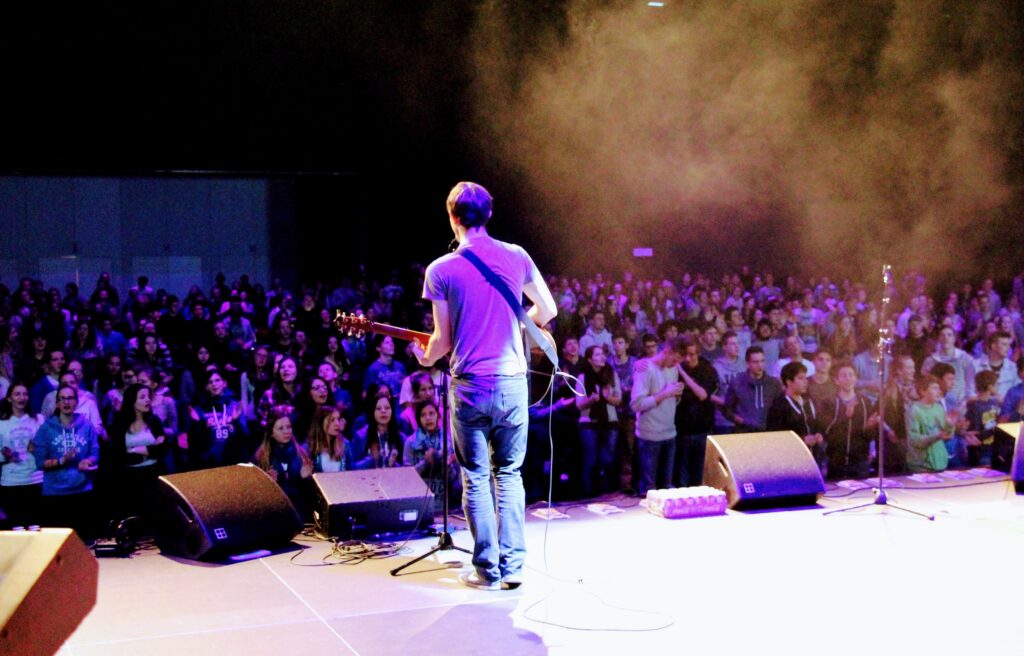
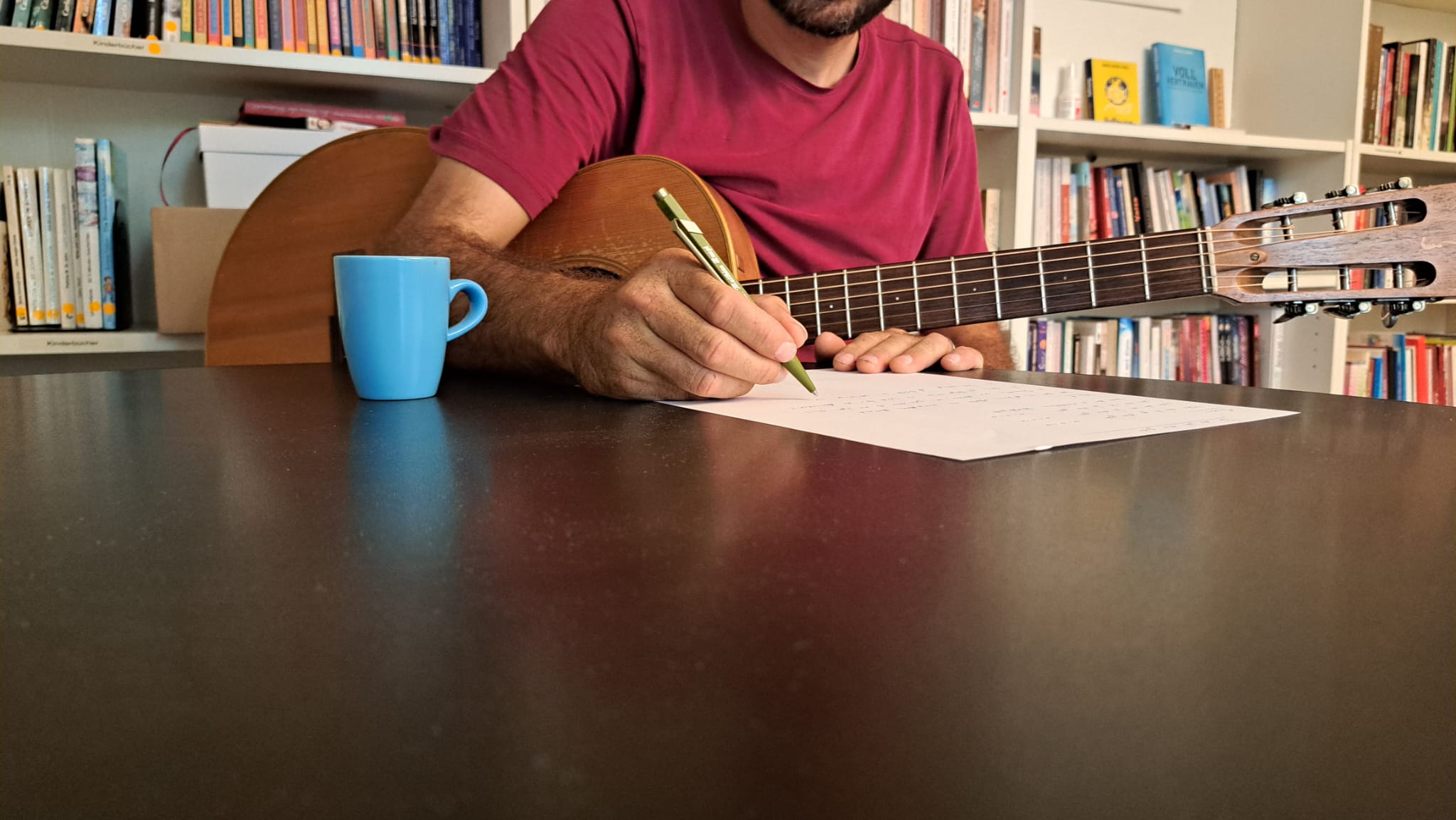
    Writing new songs is something truly wonderful, something that never fails to inspire me. I wrote my first songs when I was still a teenager. In the roughly 25 years since those first songs, I’ve written many more – some are worship songs for the congregation to sing along to, whilst others are intended more for listening.

    The Bible repeatedly encourages us to sing a new song to the Lord (see Psalm 96:1; Psalm 98:1; Isaiah 42:10). – And when we write new songs, we enter into a creative process; we become active creators. It is precisely here that the potential lies for an encounter with God, the true Creator. Furthermore, new songs reflect the truth that God can never be sung about or praised enough. The newness and unfamiliarity of a new song remind us of the new and unfamiliar aspects of God that we do not yet know, because He is far greater than we could ever comprehend.

    But how does a new song actually get made?

    Inspiration

    It always starts with an inspiration for a new song. This might be a statement I’ve read somewhere that has touched me and stayed with me. It might also be a question, a feeling, an observation or an image. For me, as a songwriter who focuses on themes of the Christian faith and worship, inspiration often comes from the Bible (in recent years, frequently from the Psalms, from which I usually read one at the start of each day). Inspiration also comes from Christian books and from quiet moments (e.g. walks). Sometimes thoughts I’ve read in a newspaper article, or something I’ve experienced or observed in everyday life, also play a part. At some point, a line of a song suddenly takes shape in my mind. I jot this down and keep it safe. Sometimes a whole song comes together in one go, but mostly it takes several stages of development, often with long gaps in between. (So don’t give up too soon.)

    Of course, I need musical inspiration too. I enjoy listening to music when I find an hour or two of free time at the weekend. It’s relaxing just to unwind and listen to music I like. Whilst listening to music, I’ve often found myself thinking: “I’d like to write a song like that one day.” It might be a rhythm I like, for example, or a melody, or the way the words are set to the rhythm and melody of a song. – It’s always great when the inspiration for the lyrics and the music comes at the same time. Sometimes, though, it’s just the lyrics (which is often the case for me at first), and if I keep an eye out for the right “musical accompaniment” then, over time, I manage to find something. That’s how I’ve ended up with lots of lyrics and poems that are still waiting to be set to music.

    When I started to write songs, I focused on making them appealing to others without losing authenticity. However, I found myself getting very frustrated at times because I received so little feedback at gigs. Eventually, I realised that writing lyrics isn’t just a necessary step for me to end up with a song (some advice from a friend and experienced songwriter played a key part in helping me reach this realisation). – Songwriting has intrinsic value because it allows me to express feelings and thoughts. Through it, I can articulate for myself things that are important to me, things I don’t understand, things I’ve come to realise, things that weigh on me or bring me joy. – Not every set of lyrics becomes a song. Not every song is intended for the public. Some are just for me. But every now and then, one emerges that I share with other people and which takes on meaning for them too. – Nowadays, I repeatedly find that people react positively and gratefully to my music. That’s very lovely for me; it’s also a goal I strive for, but not a prerequisite for writing songs.

    For me, writing songs is also a journey, a process of growth. It’s not something I do just once, as a one-off, isolated act, so to speak. It’s part of my life.

    You can find inspiration by reading the Bible, praying, reading books, listening to music, and playing along with other musicians. Learning new playing techniques on your instrument (in my case, the guitar) is also a great way to come up with new musical ideas. It also broadens your options when it comes to songwriting (it’s like a painter who suddenly has a wider range of colours at their disposal). So if you want to write songs but are lacking inspiration, go and find it.

    The purpose of the song

    When it comes to shaping the song – turning the idea that inspired me into a song – the question of the song’s intended purpose also plays a role. Should it be a song that the congregation can sing during a worship service, or rather a song to be performed at concerts? For a congregational song or hymn, the focus will be on ensuring it is easy to sing (a catchy melody, memorable lyrics, not too much text, and no complicated rhythms). For a concert piece, the emphasis will be more on originality and creativity, in order to offer the listener an interesting and varied listening experience.

    Approach

    There are many different approaches to the practical side of things. There is also some helpful literature on the subject. I can recommend, for example, the german book “Songtexte schreiben” by Masen Abou-Dakn. It is also helpful if you can play an accompanying instrument such as the guitar or piano.

    Generally speaking, you need a chord progression and some lyrics. You combine these to form a song. Then you compose a melody that flows from the chords, or one that suits the chords. If you have a melody in your head first, you look for the chords that go with it.

    We all have our own idea of what a beautiful song should sound like. This idea has been shaped by the music of others that we have listened to and played ourselves. When we write a song ourselves, it is never a completely new, original song. There are always echoes of other songs that already exist. And that’s fine. It is simply impossible to write a song whose melody and lyrics are entirely new. Nevertheless, we do create something new when we write new songs about Jesus, who inspires and motivates us. – That is, as long as we don’t simply copy what others have done. I once heard that Bob Dylan, who is, of course, a proven great songwriter, didn’t write his own songs in the early stages of his musical career, but “merely” sang existing folk songs. It was only later that he began writing songs himself. Singing and playing existing songs is therefore an excellent way to develop your own skills as a songwriter.

    So how do you go about writing a song? I can’t tell you exactly. You’ll simply have to give it a go. I hadn’t taken any courses on the subject before I wrote my first song. I’d listened to music that inspired me and wanted to write songs too. So I just gave it a go.

    I hope that, as someone who writes songs or would like to, these thoughts will help you and motivate you to set out on your songwriting journey.

  • Translated worship songs? Yes or no?

    Translated worship songs? Yes or no?

    At least in Switzerland, we still often sing songs that have been translated (usually from English). – So I found myself wondering: why do we actually do that? Don’t we have enough songs – or enough good ones – in our own language? What are we trying to achieve with these translations?

    I’ve been thinking about this question for quite some time now. But before we can really weigh up the pros and cons, let’s take a look at the reasons why songs are translated in the first place:

    Reasons why we translate songs

    One good reason why we translate worship songs into other languages, I learnt at Hillsong Konstanz, where I was also part of the song translation team for a short time. They have the vision that Hillsong is one house with many rooms (locations). Some of these rooms are not based in Australia, but in other countries with different languages. Because all Hillsong locations sing exclusively Hillsong songs, but not all locations conduct their activities in English (nor do they write their own songs in their own language), translations of their English songs are needed. The same probably applies to other Christian denominations as well.

    Another reason is probably that we are fascinated by certain songs (and their message) and want to sing them in our mother tongue (because that way we can understand them better).

    PS: Translating songs is a fine art!

    Pro-arguments

    • We understand the lyrics best in our mother tongue. Not everyone in German-speaking countries, for example, understands English worship songs that well.
    • We are not so limited to songs that were originally written in our own mother tongue.
    • On mission trips, many Christians around the globe often know songs such as “How Great Is Our God” in their own native language. This makes it possible to worship together. (Experienced first-hand in Switzerland, Austria, Hungary, Moldova and Finland.)

    Contra-arguments

    • The vision – and often the theology – of the church that sings translations from other church organisations is stretched, and sometimes even pushed to its limits.
    • Most languages already have plenty of their own worship songs.
    • Songs are often tied to a specific cultural context. It might therefore be better to use songs from one’s own country, with their own rhythms (and dances), etc.

    Action step: I’d like to encourage you to write your own songs in your own language for your own country, church association and perhaps even specifically for your own congregation. Songs that reflect the heart and vision of your church.

    Can you think of any other reasons for or against translating worship songs? Please share them in the comments below:

  • Loud worship and praise

    Loud worship and praise

    Really! Why does worship always have to be so loud? Can’t it just be done quietly!?

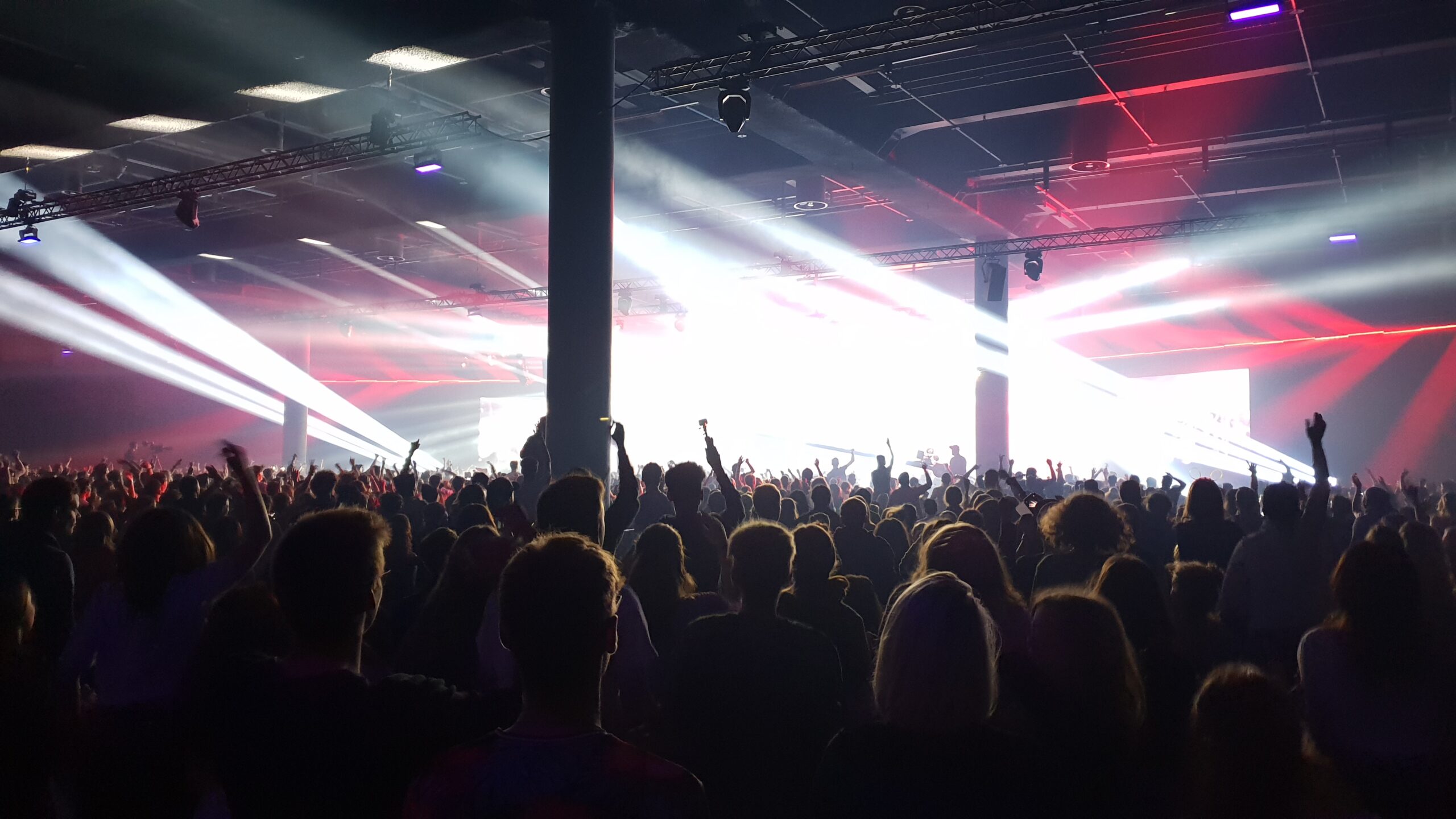
    From a purely physical point of view, instruments and voices automatically produce a certain level of volume when they make music together. From this perspective, worship (when accompanied by music) can be neither exceptionally quiet nor completely silent. Otherwise, we would simply hear the speakers humming. And that really is not the best worship sound.

    However, I wanted to find out what the Bible says about the volume of worship music. I therefore did not examine how Jesus went into silence to pray. That is also a form of worship, although without music. Apart from that, there are only a few verses in the Bible on the subject of “being still”. Most of them are in the context of: “The Lord will fight for you; you need only to be still.” (Exodus 14:14 – NIV).

    In the Psalms (the book of songs in the Bible) there are not really any passages that suggest we should worship in a quiet way. The most “quiet” psalm is probably Psalm 131.

    What I do find over 20 times in the Psalms, though, is that we are to worship and praise God LOUDLY in every emotional state (from despair to joy) (Psalm 3:4; 18:6; 20:5; 26:7; 27:6–7; 28:2; 32:11; 33:3; 47:1; 48:11; 61:1; 66:8+17; 68:3; 77:1; 86:6; 95:1; 97:8; 102:1; 105:1; and so on…)! Here is an example:

    “Be glad in the LORD, and rejoice, ye righteous: and shout for joy, all ye that are upright in heart.” (Psalm 32,11 – KJV)

    There’s something about this loud worship music. It does not necessarily have to be deafeningly loud. But it can sometimes reach around 92–95 dB(A). – The thing is this: if music is poorly mixed, it sounds like it’s deafening even at a low volume. Often because certain frequencies have got out of hand. But if music is mixed really well, it sounds fine even when it reaches 95 dB(A).

    Action step: How can you, as a worship team, support your audio engineers, or even help them improve, so that your worship sounds better?

  • Selah

    Selah

    Have you ever wondered what that stand-alone word “Selah” means, which we find in some Bible translations? (In some translations, it simply appears as: // )

    This word appears a total of 71 times in the Psalms (for example in Psalm 3:2). We could even say that it is an essential part of the Bible’s book of hymns. But “Selah” is not only found in the Psalms; it also appears three times in a prayer by Habakkuk (Habakkuk 3:3, 9, 13).

    Theologians do not entirely agree on the exact meaning of “Selah”. The most widely held view is that this word indicates a kind of pause. – (Selah. – Pause.)

    But… “Selah” means much more than just a pause or an interruption. It could also refer to a repetition, an interlude, a rise in pitch, or something similar. In other words, it’s a kind of musical instruction on how we should play or sing something.

    “Selah” invites us to reflect on the preceding text (through a pause or an instrumental interlude) or to emphasise it (through repetition or by raising our voices). – It is not known how long or how intense these “Selah” sections are. However, it is highly likely that they vary in length. Or that they last until we have had a revelation about what this psalm (or section of it) is really about.

    Fun fact: “Sela” (without “h”)is the name of two different places mentioned in the Bible (one of which is found in Isaiah 16:1).

    Action step: How might this “Selah” be put into practice in your worship-taeam andcongregation?

  • Holy silence?

    Holy silence?

    In an world where we look at our smartphones an average of 88 times a day. In an world where our calendars rule our lives and we can hardly find a moment of peace (and when we do relax, we naturally have to post about it on all platforms with the appropriate hashtags), we find ourselves, usually on Sunday mornings, in a time of worship.

    Usually we only have about 20-25 minutes for praise and worship in our churches. So naturally we want to reach as many people as possible in that time. Therefore it’s best to start with a really energetic praise song and then move on to the more reflective songs. Towards the end, always be flexible about which song would best round off the sermon. We could finish with another upbeat song. After that…

    STOP

    I have nothing against these activities, and yes, people’s time is precious, and we want to honour that by creating a space where they can encounter God as deeply as possible and also recharge their batteries. But sometimes (not always!) the best way to worship God is simply to be still. Yes, exactly. Silent. Sooo quiet. Not the whole time, but just a few minutes of total silence. No piano, no electric guitar, just you and God.

    “The Lord is in his holy temple; let all the earth be silent before him.” (Habakkuk 2:20 – NIV)

    But this few minutes feels like it goes on forever! And of course, it’s a real challenge for the band leader to know when the best moment is to start up again. But don’t panic. In heaven, there was – or will be – a full half-hour of silence! (Revelation 8:1).

    If silence is introduced effectively, it could be the best thing that has happened to our congregation this week! Silence in worship contains elements of revelation (of who God is) AND of response, explanis Matt Redman in his book “Facedown”. Sometimes we experience God in loud worship, and that’s brilliant. But we shouldn’t miss the opportunity to experience God in the stillness during a time of worship. In His presence, we quiet our hearts and automatically begin to marvel at God’s greatness and holiness (Psalm 131).

    The silence between songs can be rather awkward and make it difficult to really immerse yourself in worship. But intentional silence can lead you into a deeper level of worship.

    Action step: Here’s a question I like to ask myself from time to time, which fits in with this: “Is the noise around you quiet enough for you to hear God’s whisper?” For example: sometimes God is found in a gentle whisper, just as in 1 Kings 19:12–13, when God appeared to Elijah.

    To sum it up: I’m still against unnecessary interruptions, or awkward silence during worship times, but I’m definitely in favour of deliberately planned and well introduced times of silence during worship sessions.

  • True creativity

    True creativity

    In today’s society, it’s almost impossible not to come across a professional who excels at something and whose skill inspires us in some way. However, as long as we’re fascinated by this person and our inner voice tells us, “I want to be able to do that too”, we simply become imitators. After all, it might just be the case that we don’t have exactly the same talent as that person? I’d like to challenge you to do things in a different, creative way. You’re an original, not a copy of someone else. If you want to take it a step further and prove your discipline, why not set a Guinness World Record? 😉

    When it comes to worship, setting a world record is probably a bit more difficult… but even there you can be incredibly creative and develop your own style. Especially when you’re writing songs. Other people can be a great source of inspiration, but true creativity comes from God himself. Just how creative must God have been to create this world and us (sometimes very complicated) humans, let alone the entire universe (Genesis 1)!? When we are connected to God and He lives within us (we have a relationship with Him), then we have access to true creativity and can stop copying others. However, to have more creativity in songwriting, it takes not only a living relationship with the source of creativity, but also practice.

    True, fresh creativity comes from the source of all creativity.

    Action step: How and/or where does God inspire you? Go to that place and let God inspire you.

  • Wherever you look…

    Wherever you look…

    … that’s where you’ll end up too. You may be familiar with this saying. It’s used mainly when driving, to ensure you don’t crash into oncoming traffic at night. We find this principle in the Bible too: when Moses spent 40 days on the mountain with God, the glory of God shone on his face afterwards (Exodus 34:29). When we, as followers of Christ, follow him, we too become more and more like little Christs (as Christians were called 2000 years ago). If we want to have Spirit-filled worship, then I recommend spending more time with the Holy Spirit. Wherever you look, that is where you end up.

    Action step: I’d like to encourage you to spend more time with God, so that you can build an ever-stronger relationship with Him, and so that this is reflected in every aspect of your life.